I love to read. I may not read as much these days, but there’s nothing quite like the feeling of getting caught up in a good book—especially in this digital age.
For any bookworms out there, reading is an excellent way to expand your environmental knowledge!
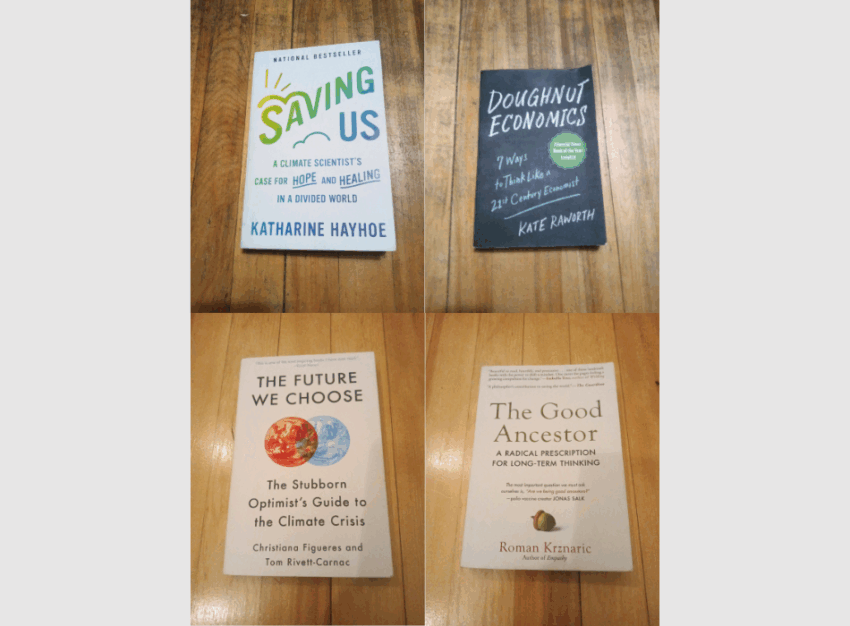
Here are four books that I feel every environmentalist should read. These environmental book recommendations cover climate science, economics, communication, politics, the arts and more. Read on to learn more about each selection!
Saving Us: A Climate Scientist’s Case for Hope and Healing in a Divided World by Katharine Hayhoe
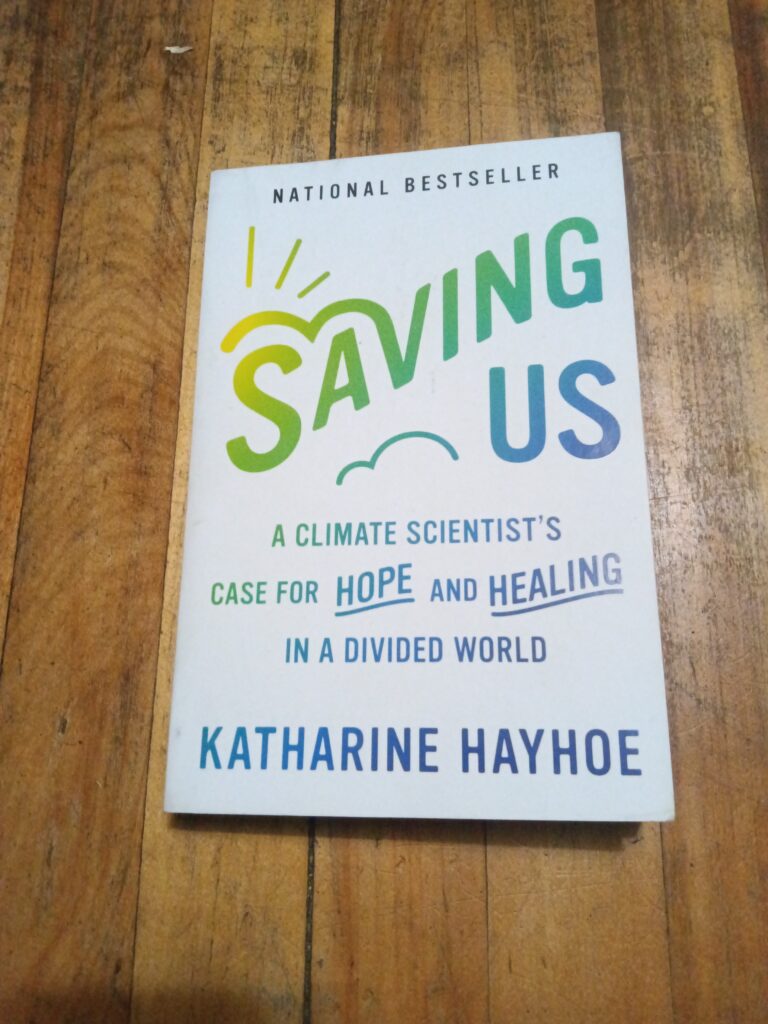
Katharine Hayhoe brings her identity as a climate scientist, an evangelical Christian and a Canadian living in Texas to her book Saving Us. In Saving Us, Hayhoe gives a primer on climate science, but also argues that the facts aren’t enough. More than facts, we can use conversation to open people’s hearts and minds about climate change. Her anecdotes about changing people’s perspectives on climate change through conversation are engaging and enlightening.
People bring their identities and past experiences to climate conversations. Framing the climate crisis through an environmental lens may not be the most effective approach. Instead, we should connect climate change to what people do care about—to their interests and values, whether that’s family, health, gardening or golf. Climate change connects to and worsens poverty, hunger, inequity and so many other crises.
Saving Us will leave you inspired and equipped to start productive conversations about climate change with the people in your circle!
Doughnut Economics: 7 Ways to Think Like a 21st Century Economist by Kate Raworth
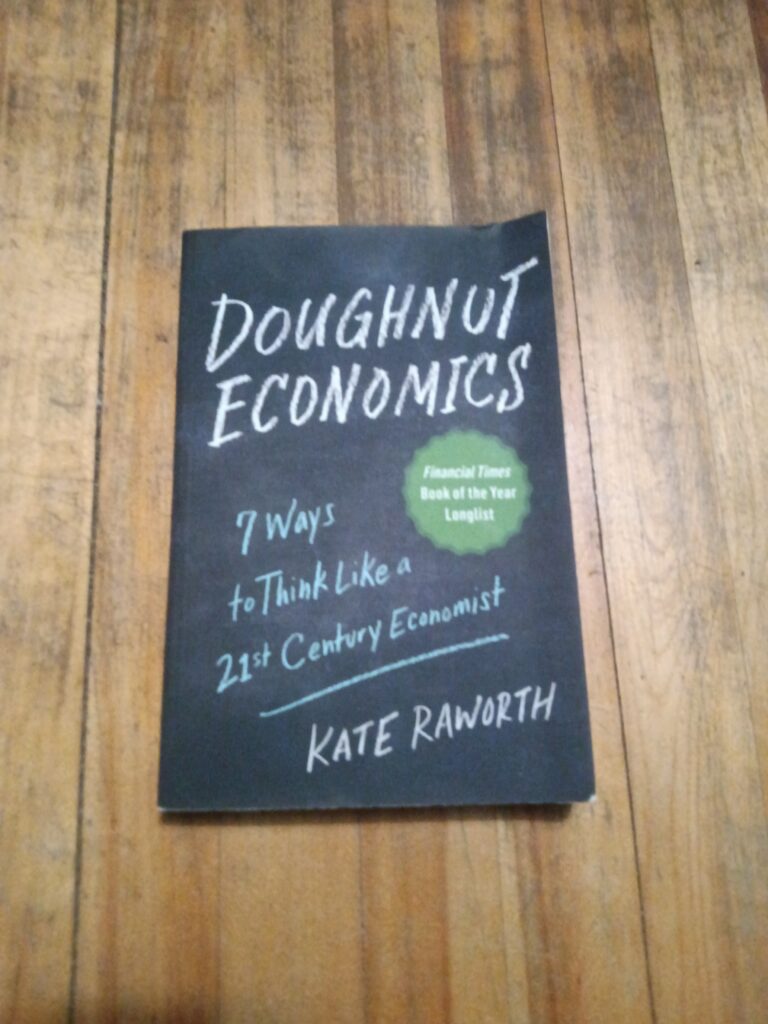
As the title implies, economist Kate Raworth presents seven ways to think like a 21st-century economist, in contrast to seven traditional economic ways of thinking. She encourages us to shift our goal from endless growth to living within the planets’ means, to see the economy as embedded in the environment, and to build a distributive and regenerative economy.
If that all sounds like a bunch of jargon, know that the book is written for non-economists, though it’s still not light bedtime reading. Raworth uses metaphors and visuals to make her message more accessible, most notably the concept of the doughnut.
At the heart of the book is the idea of doughnut economics. Picture a doughnut. The idea is that we want to stay within the doughy part of the doughnut so that we’re guaranteeing a basic social foundation for all members of society without surpassing the ecological ceiling, or planetary limits.
If Raworth doesn’t tell us exactly how to stay within the doughnut, she does convince us (or at least me) that doing so is a logical and just goal for humanity!
The Future We Choose: The Stubborn Optimist’s Guide to the Climate Crisis by Christiana Figueres and Tom Rivett-Carnac
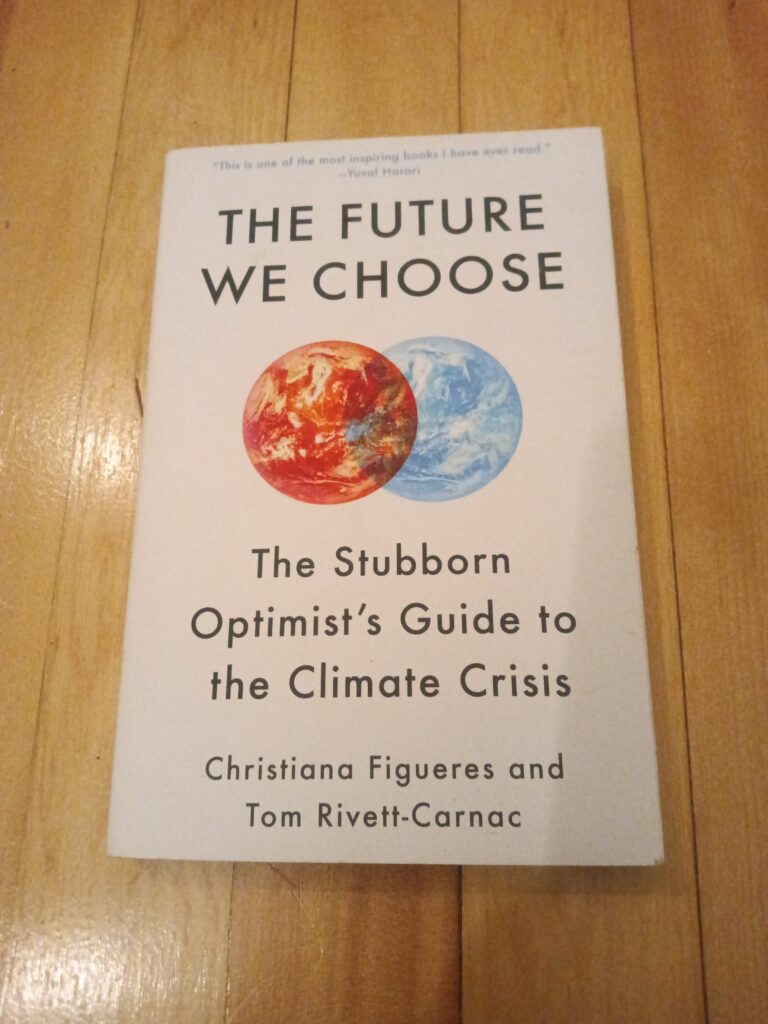
Christiana Figueres and Tom Rivett-Carnac led negotiations for the historic 2015 Paris Agreement, a perspective that brings a spirit of collaboration and optimism to their book. The Future We Choose is slender, well organized and action focused.
The book starts by presenting two possible futures: the world we are currently creating based on our current trajectory of carbon emissions and the world we must create. The description of the world we are currently creating is terrifying, presenting a vision of severe storms, conflict, hunger, disease and despair. Thankfully, the rest of the book focuses on optimism and action.
Figueres and Rivett-Carnac encourage us to adopt a mindset of optimism, abundance and regeneration. They present 10 overarching actions and then specific actions we can all take to reduce our emissions. You’ll leave the book feeling that we can and must take action to protect the planet we all call home.
The Good Ancestor: A Radical Prescription for Long-term Thinking by Roman Krznaric
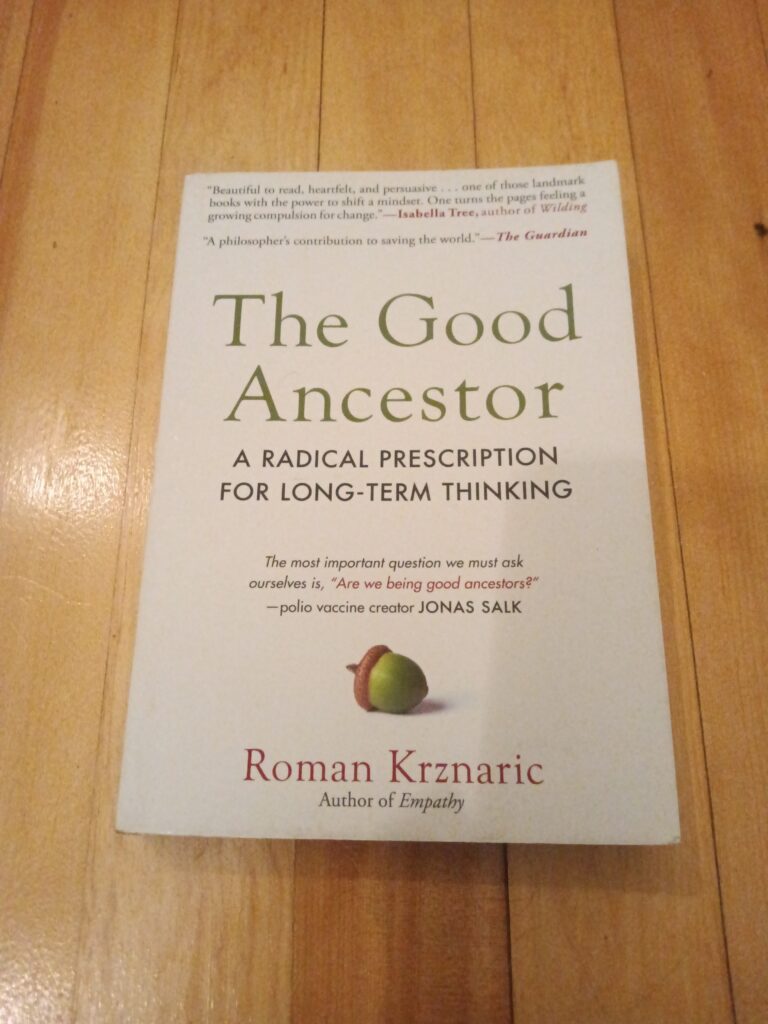
Philosopher Roman Krznaric argues for the importance of thinking long and leaving a good world for future generations. Though so much of our society is centred around short-term thinking—including our political systems, online shopping and news cycles—Krznaric points out that, as humans, we also have the capacity for long-term thinking. Just think of building cathedrals, saving seeds or saving for retirement.
Krznaric weaves in examples from different disciplines—including art, music, science and politics—to show how we can cultivate our ability to think long. How can we be good ancestors and care about people who will live on this planet long after us? Krznaric has a few suggestions and highlights “time rebels” who are doing things differently and taking a longer view.
Though the book is less obviously ecological than the others on this list, a big part of being a good ancestor is leaving a healthy and thriving planet for future generations.
Environmental book recommendations
These four books address the environment and climate change from different angles. They will increase your knowledge, widen your perspective and, most of all, inspire you to take action!
I want to know: What other environmental books would you add to this list?
This blog post is dedicated to my uncle Ian. He was passionate about protecting the environment and leaving a better world for future generations. When he found out I was starting this blog, he was so enthusiastic that he sent me copies of these four books to read! Ian passed away sadly and unexpectedly this fall. You can learn more about (and support) the environmental projects he was involved with in his home community of Harrogate, England here: Zero Carbon Harrogate and Long Lands Common.
Categories and tags:
Share this post:

I am sorry for the loss of your uncle! Thanks for the recommendations! Katherine Hayhoe is great, and I’ve been meaning to read Doughnut Economics and The Good Ancestor. I recommend Is a River Alive? by Robert Macfarlane.
Thank you, Gillian! I found the Katharine Hayhoe book interesting and quite readable. I’ll have to check out the one you recommended!
❤️ brought tears to my eyes
I hope it’s a fitting tribute to him!