My experiences with gardening were limited before moving to Moncton. When I was a child, I helped my parents choose annual flowers and bulbs, and one of my chores was watering the plants in the backyard. My crowning achievement as a gardener was growing an apple tree from seed—which is still standing today!
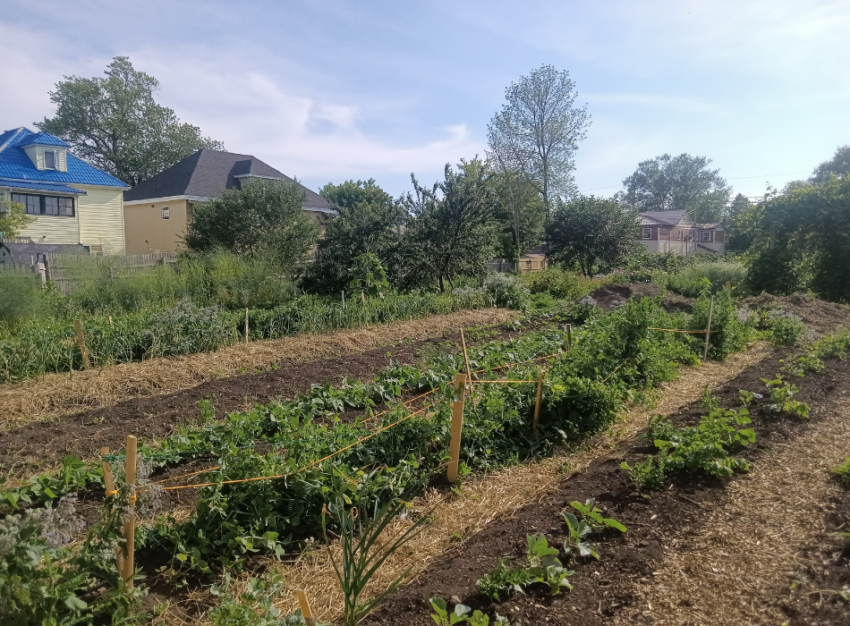
I felt as though gardening was an activity that I was missing out on as an environmentalist. That changed when I got involved with Park & Pine Collective Garden. Park & Pine follows a collective garden model, which means that we work together in the same plot, sharing tools, knowledge and the harvest. If you’re based in the Moncton area, they’re awesome and you should check them out!
Gardening has many benefits for both the planet and people. In this blog post, I dig into some of those benefits!
Developing a closer connection to plants, soil and where food comes from

When gardening, you watch plants grow from seed to seedling to full-grown plant. This helps you feel closer to nature and develop a greater appreciation for plants and natural processes.
You see what fruits and vegetables actually look like when growing. This experience is very different than buying plastic-wrapped produce from the grocery store. You learn to eat with the seasons and start to value your food more (especially knowing how much effort you put into growing it).
You also literally put your hands in the dirt and get your hands dirty!
Practising ecological growing methods

In your garden, you may choose to use ecological growing methods. These practices can improve soil health, save resources, help with climate adaptation, and attract wildlife and pollinators.
Some ecological methods you may want to try include organic gardening, regenerative gardening, planting native plants and growing a rain garden. You could also make your own compost or set up a rain barrel to collect rainwater. Try combining some of these practices for increased impact!
Learn more about ecological gardening in these articles from Joe Gardener and the Wild Seed Project.
Trying new foods and fighting food waste

Gardening encourages you to try new foods that you might not normally buy. From the harvests at Park & Pine, I’ve tried some new-to-me foods like haskaps and ground cherries. And my parents would be amazed to see me snacking on raw sugar snap peas!
You also need to get creative in the kitchen to prevent food from going bad. For ideas for using up different ingredients, check Love Food Hate Waste or my post on using up different foods. You can also Google “how to use up [ingredient]” or “how to cook with [ingredient]”! So far, I’ve roasted radishes, made tomato sauce and more!
Building community

Gardening (particularly at a community or collective garden) helps create community. You may also be able to find a gardening club in your area. Connecting with other gardeners lets you exchange gardening knowledge and recipes (like what to do with all those garlic scapes or green tomatoes).
Personally, gardening has helped me feel more rooted in Moncton and meet people who live in the same neighbourhood as me. Gardening can also help newcomers feel more settled in the region, as discussed in this article from Radio-Canada (article in French).
Improving your health
Gardening gets you outside and physically active—bending, crouching and moving around. It’s a mindful activity that can improve your mood and mental health.
Gardening also encourages you to eat more (fresh) veggies! Homegrown produce is often tastier and free of pesticides and other chemicals. It may also contain more nutrients than store-bought produce.
Reducing greenhouse gas emissions
Growing food at home reduces carbon emissions from transporting food. If you think about it, most produce at the grocery store is shipped from other provinces or countries—often by plane, train, boat or truck.
“Food miles” is the distance that a particular food travels from where it was produced to where it’s sold. According to a study published in Nature Food, food miles are responsible for nearly one-fifth of all food system emissions. This takes into account emissions from transporting food as well as fertilizers, machinery and animal feed.
Saving money
With the increasing cost of living, many people are turning to gardening as a way to save money. Does growing your own food actually save money? It depends! There can be high costs for the initial setup, including the tools and materials, seeds or plants, and fertilizer.
However, there are things you can do to save money while gardening! There are suggestions in these articles from MSU Extension and Garden Myths, including using space efficiently, starting small, and growing high-yielding vegetables that you enjoy.
The benefits of gardening
Gardening has many benefits, from improving human and soil health to building community. If you haven’t tried gardening yet, I’d encourage you to give it a try, even by growing houseplants! The planet, your health and your wallet will thank you!
I want to know: Do you do any gardening?
Categories and tags:
Share this post: