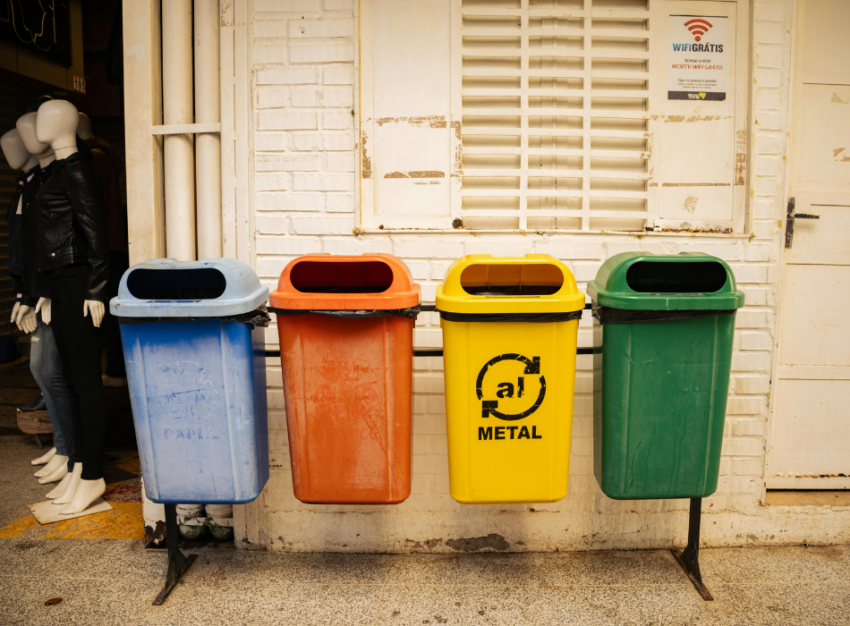
I’ve moved a lot, and each city has had its own system for recycling. Toronto tosses all recycling into one bin, while Ottawa separates out paper and cardboard. Halifax and Moncton use bags instead of bins. In Wales (at least where I was living), you sort glass by colour. And it’s always a toss-up whether you can recycle materials like plastic bags and styrofoam.
The different systems can be confusing for visitors, people who’ve recently moved to the region and even those who’ve lived there a long time.
Here in Canada, recycling rates aren’t the best. There are different ways to calculate recycling rates, but one global standard is the Environmental Performance Index (EPI) by Yale and Columbia universities. According to the EPI, Canada’s recycling rate (the proportion of recyclable materials that is actually recycled) is 23.1%. That puts us in 57th place, between Portugal and Burkina Faso. Clearly, we have work to do!
I’ve always gotten the sense that recycling works better in other parts of the world, particularly in Europe. I was curious and did some research. Here are some global recycling examples we can all learn from!
Recycling systems from around the world
Each country has its own way of recycling—there’s often variety even between different cities and regions. Looking at global recycling examples can give us new ideas and show us that there are different possible ways of organizing waste collection!
Germany: Recycling leaders

Germans are known for being rule abiding and efficient, so it’s no surprise that they excel at recycling. According to the EPI, Germany’s recycling rate is 49.8%. Different measures have put the country’s rate even higher, at highest or second highest in the world.
How do they manage it? Colour-coded bins with clear labels separate waste into multiple categories. The country also uses the Green Dot System, in which a green dot on packaging indicates that the company has paid a fee for its recycling. Germany also has a deposit return system for bottles, with an astounding 98.4% return rate.
They also implemented a plastic bag ban and set an ambitious target of a 65% recycling rate by 2020. Learn more about waste management in Germany here.
Sweden: Innovation and incineration

Sweden’s recycling rate sits at 39.7%, with high recycling rates for certain materials—87% for PET plastic bottles and aluminum cans in 2020.
The Scandinavian country has taken certain innovative measures, like requiring residents and businesses to separate food waste and mandating recycling stations to be located within 300 metres of residential areas. The country also boasts a can and bottle deposit system.
Sweden likes to claim that just 1% of its trash ends up in landfills. However, a good portion of that (about 59%) is converted to energy. This includes biogas from food waste. They use the resulting energy to, among other things, power buses and heat buildings. Waste-to-energy systems have their pros and cons, but at least you can’t say that they’re wasting materials!
Wales: Government-led action

Wales is first in the UK and second in the world for recycling. The country has set the ambitious goal of being zero waste by 2050.
An underlying factor for Wales’ success is the government’s political will to encourage and fund recycling. The Welsh government set recycling targets for local authorities and has provided them with over £1 billion in funding since 2000 to strengthen their recycling services. Many local authorities also follow the same collection blueprint (recommended collection method), and there are certain items that are collected across the country, like glass, paper, cans, and plastic bottles.
The government has run a national recycling campaign called Wales Recycles. They’ve also implemented a charge on plastic bags and use food waste to generate energy, and some local authorities have reduced general waste collection to once a month. Go Wales!
Romania: Bottle deposit champions
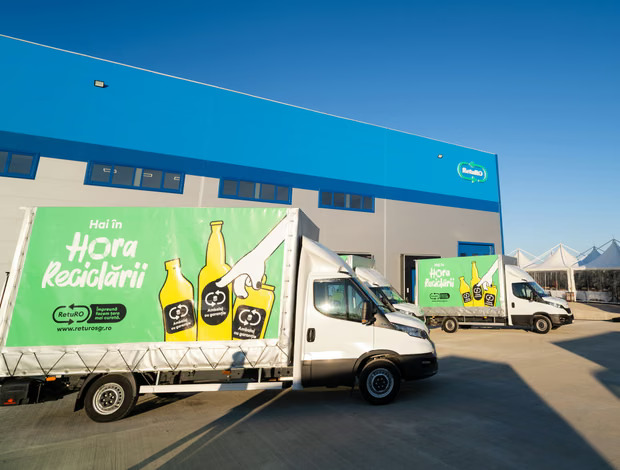
Romania is a recycling success story! Their recycling rate used to be among the lowest in the EU, hovering between 11 and 14%.
However, since they implemented a deposit return system (RetuRO) in 2023, the situation has improved quite a bit. Since the launch of the system, collection and recycling of beverage packaging rates have risen to as high as 94%.
As with other deposit systems, customers pay a deposit and get the money back when they return the bottle or packaging. Bottles can be returned to collection points, often in local shops. Between November 2023 and September 2025, Romanians returned about 7.5 billion beverage containers. Learn more about the system here.
Although beverage packaging accounts for just a small portion of all waste in Romania, the deposit system is an example of what can be achieved with ingenuity and imagination!
Japan: Sorting superstars
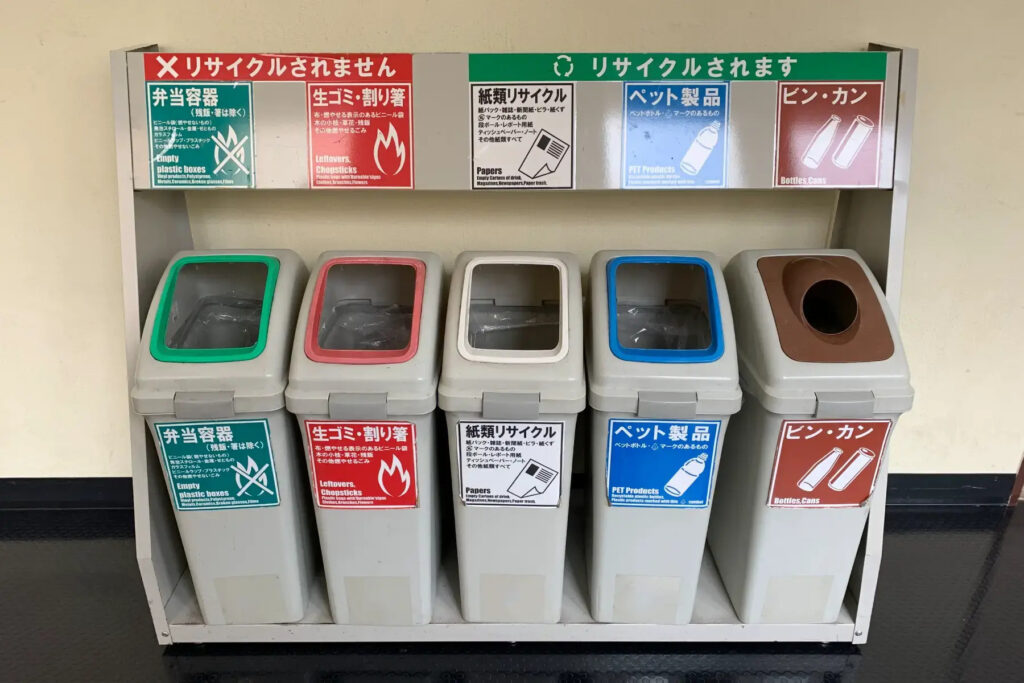
Japan’s recycling rate is not as high as some other countries on this list, but they use some innovative approaches. Overall, the Asian country separates waste into burnable, non burnable or recyclable, but there are distinctions within that. Some local authorities separate waste into more than 10 different categories! Waste is separated using colour-coded bags. There are few public trash bins, which encourages people to bring waste home and sort it properly! The country aims to be plastic free by 2050. They’re seeing some progress given that 94% of steel cans and 67% of aluminum cans were recycled in 2021.
Japan has several rules for recycling, such as tie bundles of paper or cardboard together with string, and rinse plastic containers and remove their labels and caps. Japanese people may receive fines if they dump waste, litter or sort incorrectly.
Japan uses some of its waste to produce energy (through incineration) and some for backfilling (reclaiming land).
Global recycling examples
Each country adopts its own approach for recycling, and each has its pros and cons. There are some common threads among these examples—such as sorting waste into multiple categories, converting waste into energy and charging a deposit for bottles—and they all offer something to learn from!
I want to know: How does recycling work where you live?
Categories and tags:
Share this post: